
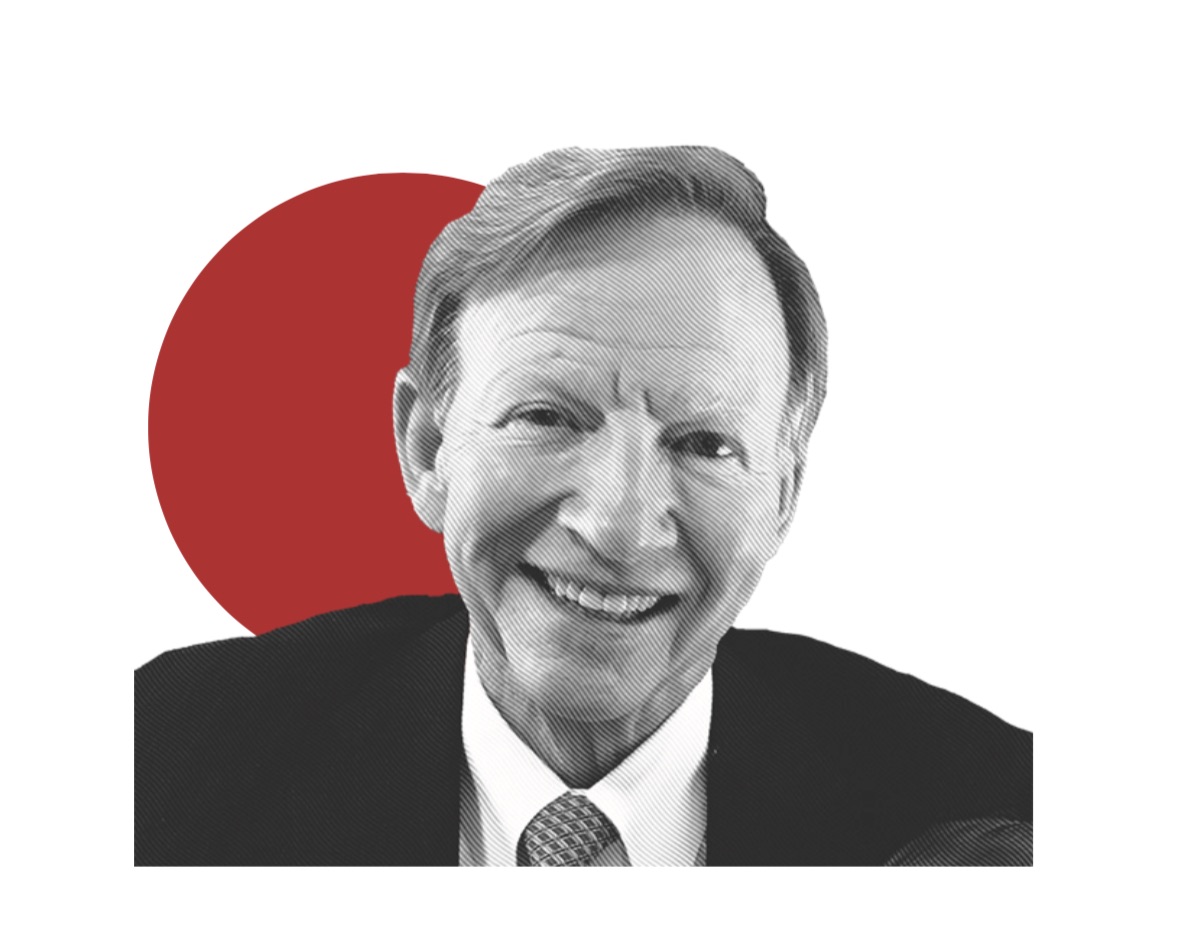
Mike Carrell is likely a familiar name: This born-and-raised Corpus Christi local has spent the course of his career in the Coastal Bend and has made big impacts along the way. Carrell attended Carroll High School, where he discovered an aptitude for math and science that initially led him toward an engineering career. He even obtained his master’s degree in engineering before a fortuitous offer to enter the banking industry. What was initially Texas Commerce Bank ultimately became Frost Bank in 1984, where Carrell spent over 27 years of his career.
This foray into banking was partially fueled by his desire to remain in Corpus Christi. His love of this city also saw him engage with many nonprofit organizations and community initiatives, many of which he is still involved with today. He has served as President of the Chamber and President of the Rotary Community Foun- dation, sits on the Port Commission and has been involved with the USS Lexington, Costa Venture Community Foundation and the Mustang barbecue group—among several others. Carrell worked for Frost Bank from 1993 until his retirement in 2020. It likely comes as no surprise that he has kept professionally busy in his retirement, working in engineering.
AH: What have been the keys to your success?
MC: Something I would say is sticking it out. I’ve been in situations that differ from the way you anticipated them going, and you may want to make a change or change paths. I would say to hang in there, because it’s so rewarding when you get to the other side. You’ve just got to hang in there long enough to allow it to develop and for things to come together.
AH: Of all the leadership skills that you have learned over the years, what was something that was crucial to understand?
MC: It’s a balancing act as a leader or manager to try to both accomplish things and continue to grow and develop your team. Whether it’s in banking or engineering or another industry, if you’re in charge of the project and your success depends on getting the project out, you’re relying on people that are reporting to you to produce. And at the same time, you’re growing these people. You want to encourage these young people and you want to help them grow. But it has to be tuned into the deadlines and the production.
AH: Is there something you wish
you would’ve known when you first started your career?
MC: No, because I was willing to try different things. Looking back, I got to do everything I was interested in, such as wanting to be an engineer, obtaining my MBA, have a banking career and wanting to be active in the community, be on these boards—and now I get to do more engineering.
Frankly, I’ve been fortunate to do more than I ever thought I would. l feel very blessed and fortunate to have had this career and the relationships that I’ve enjoyed in this community.
AH: What would you say to someone who’s just experienced a failure or a setback in their career?
MC: Hang in there. Don’t cut yourself short; be patient. You’ve got to give time for the dots to come together and start making sense. Your timing may not be the same timing that it takes to understand everything. Hang in there a little longer. I have to admit there were things I wanted to get out of, but people some way or another encouraged me. It pays off; it has for me.
AH: What would you tell someone who wants to take their career to the next level?
MC: I think there’s two categories in that regard. Firstly, you’ve got to convince people that you’re the right person to be elevated or to be moved up to the new job. You can do that by getting your credentials lined up to justify it. At the same time—credibility. You’ve got to convince the people that this is serious to you, and you’re committed.
Also, I’ve told people to try to join something in the community. Get involved. If your resume reflects it and your attitude reflects it, then you have what it takes. And it’s not about resume building, of course. It’s about credibility, seriousness and being totally committed to what you’re doing.
AH: What are some of your favorite ways to recharge?
MC: I like to stay busy. I have a little ranch about an hour away. If I’m not working, I like going out there and doing projects, building things and working out there. I go to relax—it’s such a different setting and I feel recharged. I really enjoy that.